

Keyword research is one of those tasks that never really ends, and it’s also the thing most likely to make or break an SEO effort. Pick well and you get found by the right people. Pick badly and even solid content sits invisible on page four. Here’s how to actually choose the right keywords for SEO, plus the mistakes that quietly wreck most keyword lists.
What Are Keywords?
The specific words people enter into search engines to find answers to their query are called keywords. It connects the user’s query and what content you provide.
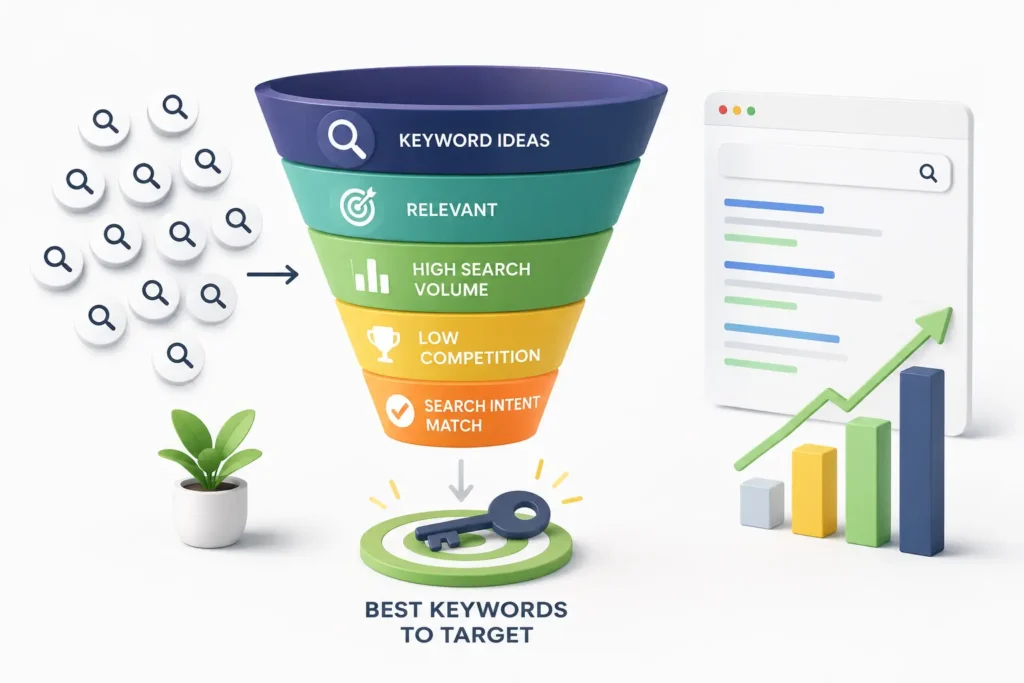
Three factors determine a really good keyword: a high enough search volume to be worthwhile, a low enough level of competition to allow you to rank realistically, and genuine relevance to your offerings. A keyword often performs poorly if it just hits one or two of those. You have to find the balance on these three, not the highest number on any one of them.
How to Choose The Right Keywords For SEO
Identify The Core
- List your company’s primary categories.
- Select five to ten general topic groups.
- Imagine yourself in the shoes of your client.
- Write down the search terms they would use.
Keyword Research Tools Are Your Friend
- Use free options like Google Keyword Planner.
- Try premium platforms like Semrush or Ahrefs.
- Use free browser extensions like Keywords Everywhere.
Examine Keyword Metrics
- Check the Search Volume metric.
- Avoid terms with zero monthly searches.
- Check the Keyword Difficulty score.
- Balance high volume with realistic competition.
Check Search Intent
- Type the keyword into Google.
- Look at the top ranking results.
- Ensure your content matches the results.
Select Long-Tail Keywords
- Look for phrases with more than 3 words.
- Target specific queries like “Casual sneakers for men”.
- Face less competition from big brands.
Mistakes People Make When they Choose The Right Keywords For SEO
The keywords part is the easiest. It’s picking the wrong keywords that will actually cost you and cost you maybe weeks of content no one is actually visiting. Here are the common pitfalls:
High Volume Keywords – The number one trap. Impressive numbers, but numbers also represent insane competition. Can you actually realistically compete here? Be honest with yourself.
Missing Search Intent – Close Second. The keyword might be stellar, but if your format doesn’t match intent you’re toast. Check those search results!
Blindly Copying Competitors – Don’t just grab your top competitor’s keywords if you don’t have their domain authority level. Go with what you can realistically rank for.
Underestimating Long-tail keywords – A few super targeted long-tail keywords can add up to lots of traffic, and conversions! Letting your keyword list get “stale”. Keywords shift over time. Something you optimised for 6 months ago might be a poor choice now.
Keyword Stuffing – It is stuffing keywords in your content in irrelevant places to increase its density. But search engines may backlist websites practicing this.Natural language is better for all parties.
FAQ on How to Choose The Right Keywords For SEO
Some frequently asked questions on how to approach keywords:
- What keyword research tools are used to choose the right keywords for SEO ?
The Keyword Planner from Google is amazing and FREE for starting. You can graduate to Ahrefs or SEMrush later when you need the more comprehensive data and competitive intelligence.
- How many keywords per page?
Target one primary keyword, with perhaps up to 3-5 supporting keywords.
- How often should I refresh keywords?
Try to and revisit your list at least every few months or as needed when reviewing existing content.
Final Thoughts
To choose the right keywords for SEO, there’s no one magic keyword that opens the gates to the universe. You have to develop a process. Choose your main topic, become somewhat decent at a few tools, eyeball those numbers, make sure you understand intent before writing a word, strategically exploit the power of long-tail and know the common pitfalls.
Once your keyword list is solid, the next question is whether your site is technically ready to rank for it – read Why Your Website Is Not Ranking on Google And How to Fix It .